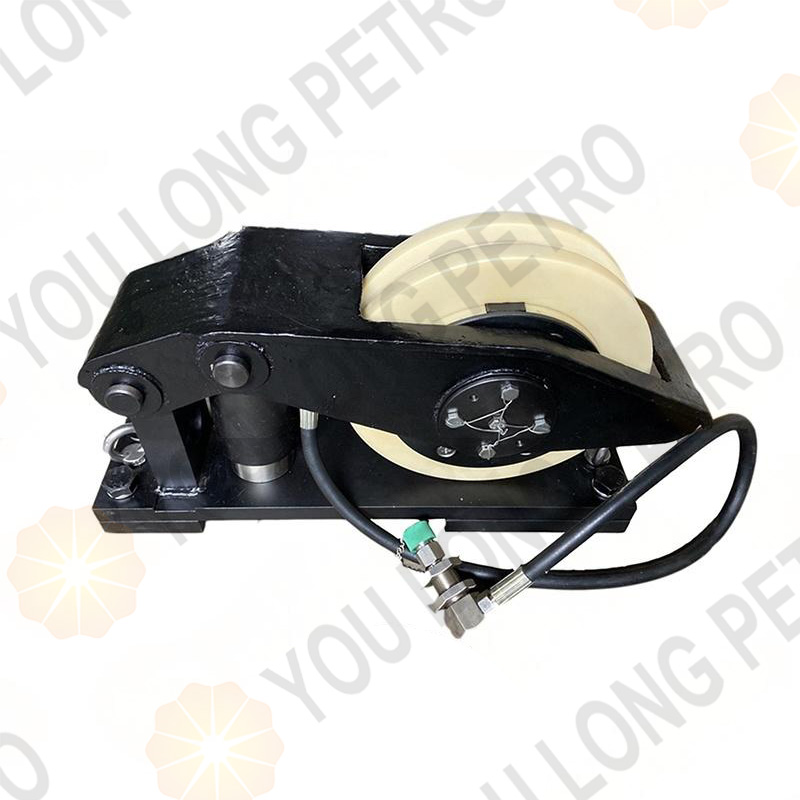
SZJ-ZN Rotary Table Torque Sensor And Gauge SJPETRO JPIM
描述
SZJ-ZN Rotary Table Torque Sensor And Gauge SJPETRO JPIM
SZJ-ZN System introduction:
Main technical specifications
Working temperature:-30~65℃
Relative humidity:0~90%
Measuring range:0~45kN·m(display mode 0~500 scales)
Measurement error:≤±2.5%FS
SZJ-ZN System composition and working principle:
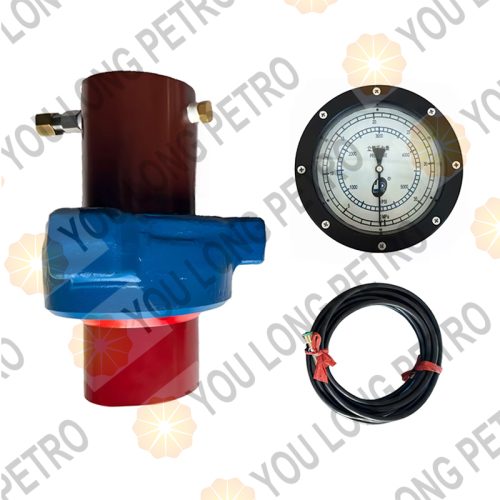
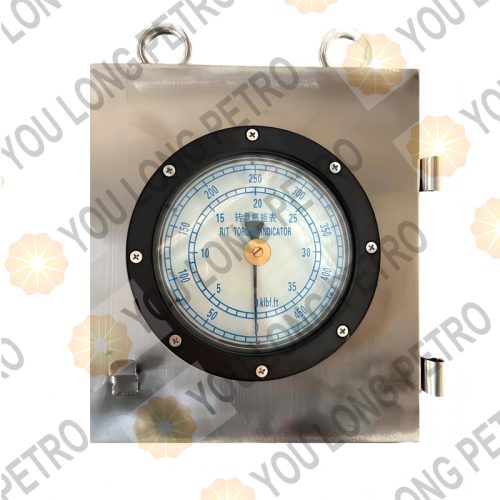
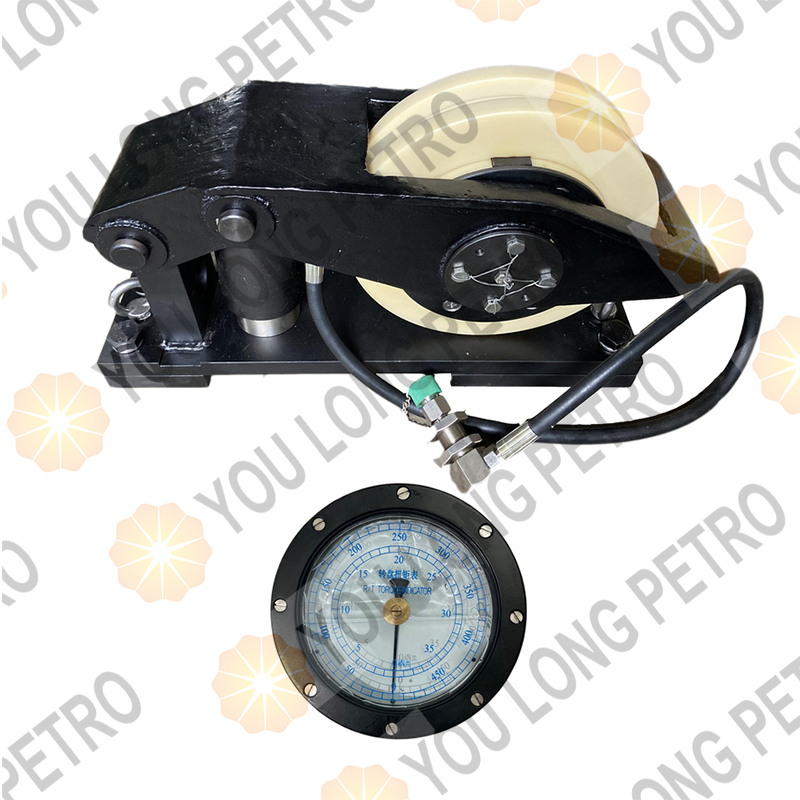
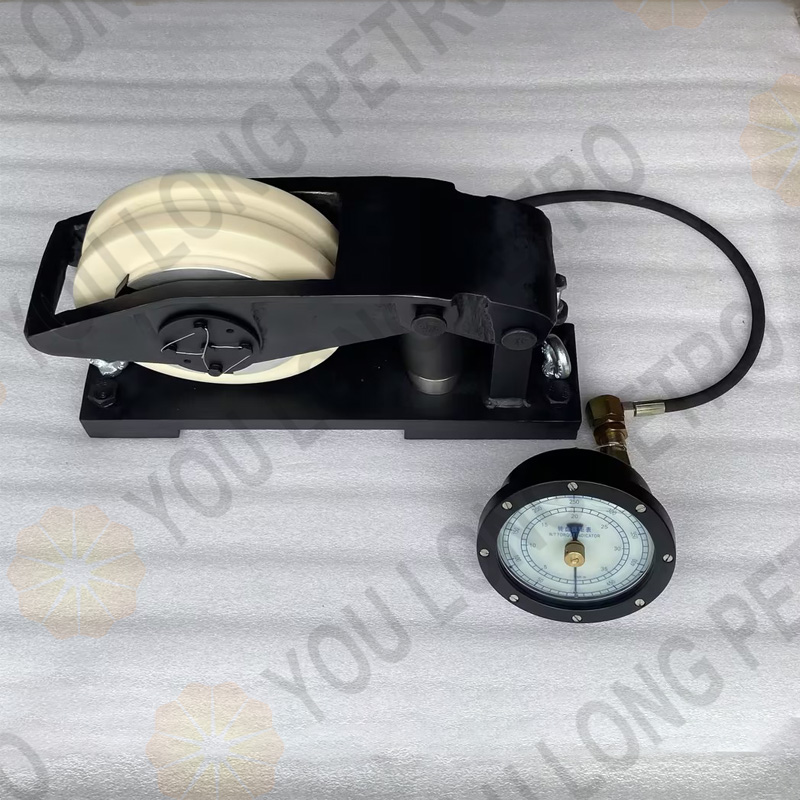
Measuring unit of mechanical drilling rigs (driven by rotary chain) consists of idler rotary torque
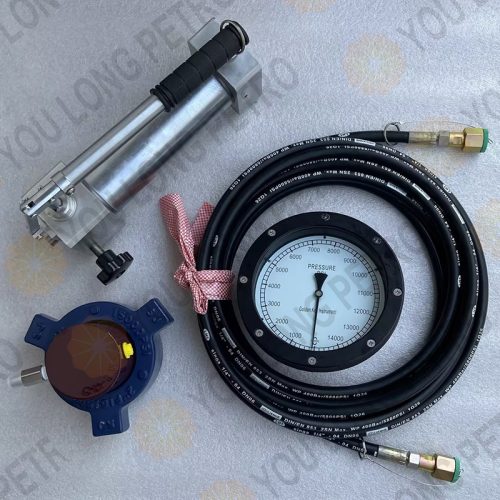
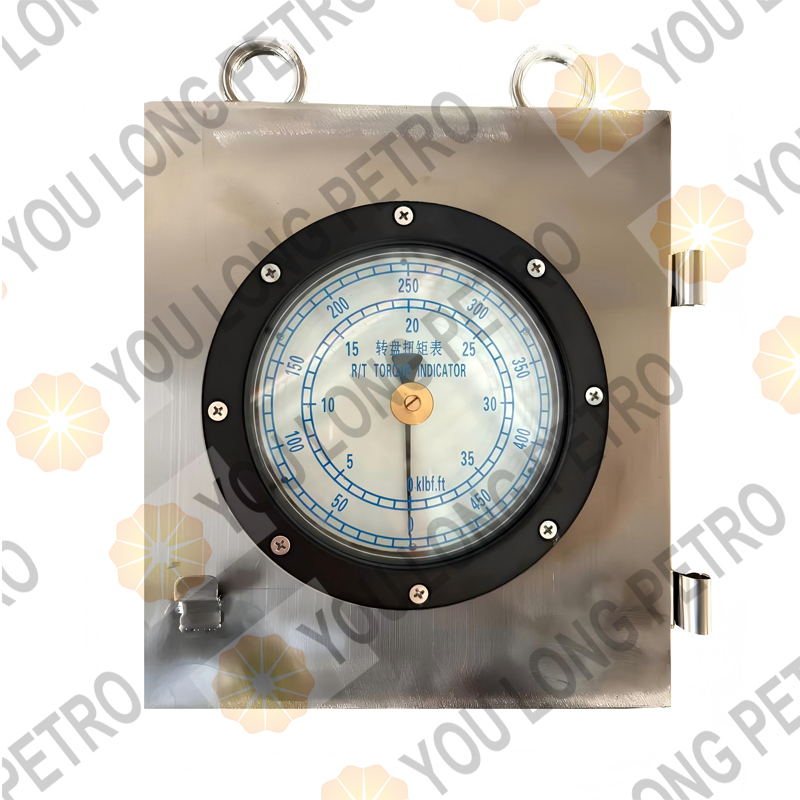
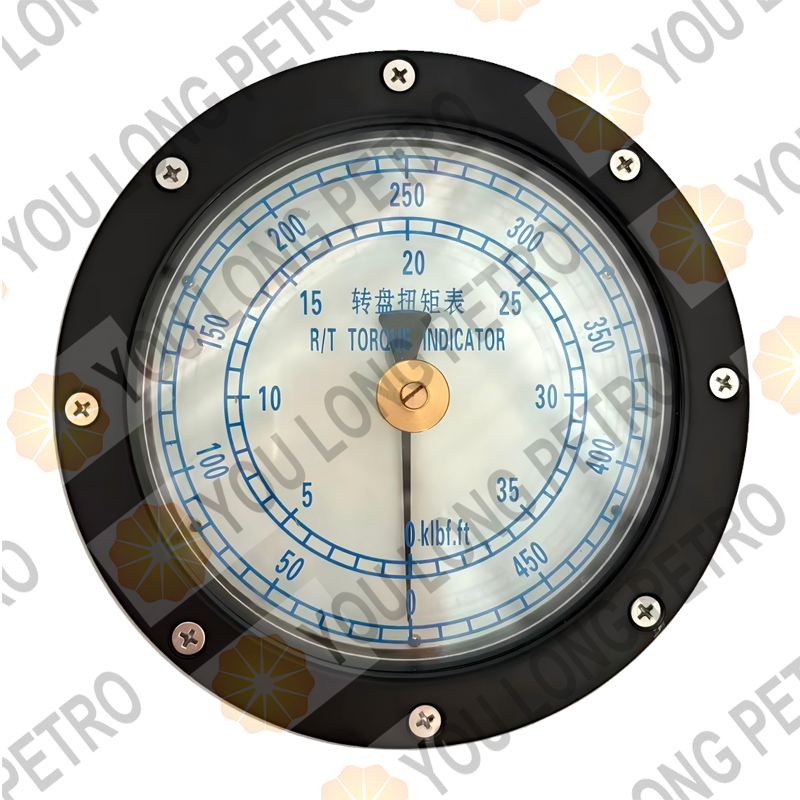
sensor (Figure 1-1), rotary torque gauge (installed in the driller’s console), damper valve,
connecting hose, and etc. Rotary torque measuring unit obtains rotary torque indirectly by testing pull force of tight side of rotary drive chains. Install rotary torque sensor under tight side of drive chains. What’s app +8615972752793 Luben@youlongpetro.com The idler of sensor forms an angle with the chains by jacking them up; when rotary table exerts a torque on the drill stem, the drive chains will produce downward pressure onto the idler, which has direct proportion to rotary torque. The pressure is transmitted to the bourdon tube of rotary torque gauge via hose of hydraulic system, and the free end of the tube thus begins to
move, which in turn drives the pointer to deflect by an amplifying mechanism to indicate rotary torque. Connection parts of sensor are shown hereunder:


Two rotary torque sensors of the same type can be installed for the measurement of torque rotating in clockwise and anti-clockwise directions. Users can choose to use one gauge or two gauges. When there is only one gauge, the operator has to switch between two sensors manually. What’s app +8615972752793 Luben@youlongpetro.com
The key point for the use of the idler sensor is that there must be enough space in the chain box for installation and meet the requirements of the sensor ordered (e.g. single or dual chains, 2inches, 1.5inches or 1.75inches, etc.).