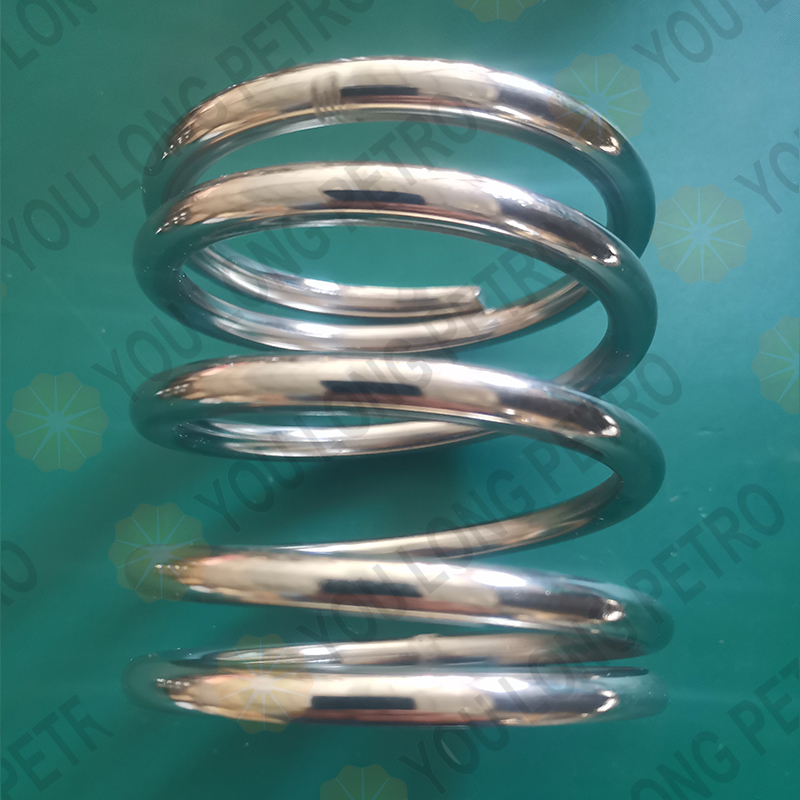
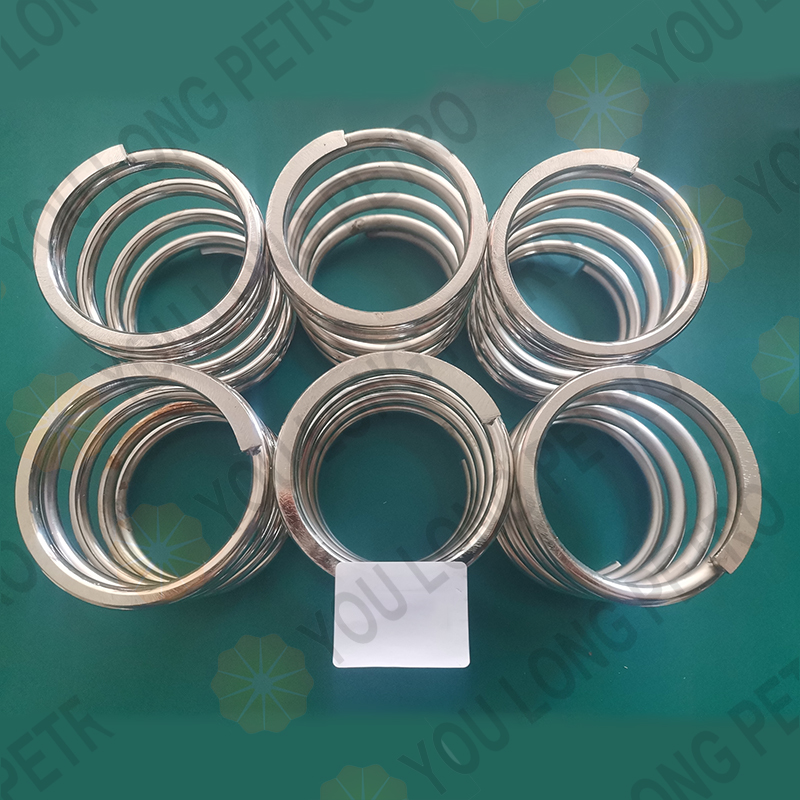
4P100198 high strength valve spring fits 3.5″ and 4.5″ SPM TWS600S fracturing pumps, stable reset performance, direct OEM replacement.
4P100198 Valve Spring For SPM TWS600S Plunger Pump Replacement Parts
描述
4P100198 valve spring is key fluid end spare part for 3.5″ and 4.5″ SPM TWS600S plunger pumps. (4P104721 is for 2.5″ 2.75″ 3″ TWS600s Pumps)
Adopts high quality alloy spring steel with strict heat treatment, featuring excellent compression resistance and fatigue durability. It ensures prompt valve closure and prevents liquid backflow under high pressure.
Standard dimensional accuracy enables easy installation and perfect fit, suitable for long-term service in oilfield fracturing, cementing and acidizing work.
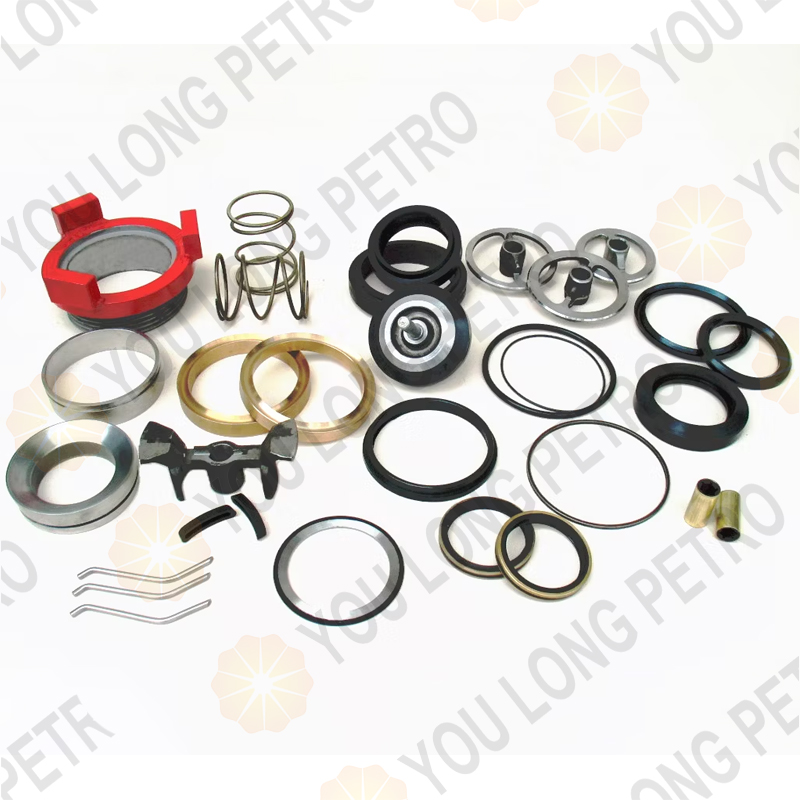
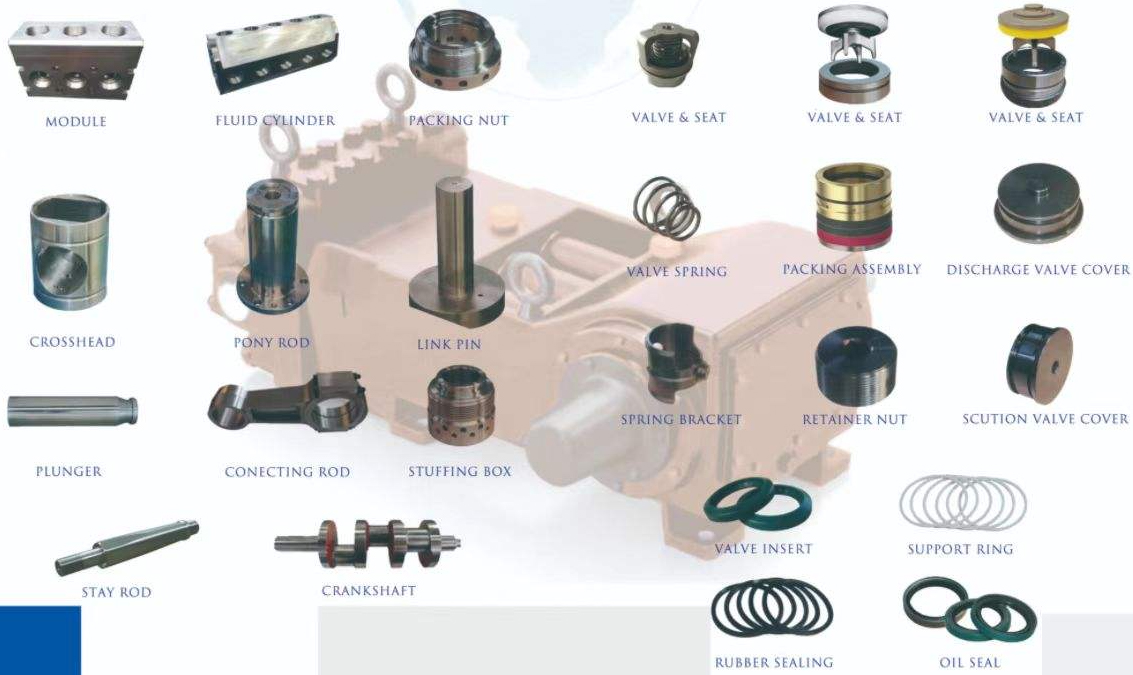
we supply valve for a full range of well service pumps, covering HT400, TWS600S, QWS1000, TWS2000-2250, QWS2500, QWS2800 and FMC WQ2700 , also supply frac pump spare parts include fluid end parts and power end parts, If you need any part numbers or other configurations of the plunger, contact YOU LONG PETRO for more details.
Valve Spring FAQ (Frac Pump Fluid End)
Q1: What exactly is a frac pump valve spring?
A valve spring is one of the smallest but most critical wearing parts inside the fluid end of SPM TWS600S frac pumps. It is a high-tension steel spring installed on the valve assembly. Simply put, it is the part responsible for pushing the valve back closed every single pumping stroke. Without a qualified valve spring, the pump cannot hold pressure normally.
Q2: How does a valve spring work during pump operation?
The working principle is very straightforward. When the plunger pushes high-pressure fluid into the pump cavity, the fluid force pushes the valve upward and compresses the spring, allowing the fluid to pass through. Once the pressure weakens or the stroke ends, the spring rebounds quickly and pushes the valve back to its seat tightly. This repeated opening and closing ensures one-way fluid flow, prevents backflow, and maintains stable pump pressure output.
Q3: Why do valve springs wear out so easily on frac pumps?
Valve springs fail faster than most other parts mainly because of extreme working conditions. First, they endure high-frequency compression and rebound nonstop during pumping, usually millions of cycles, which causes metal fatigue over time. Second, fracturing fluid carries sand and impurities, creating continuous friction and impact. Third, high pressure and temperature in the fluid end accelerate material aging. These combined factors lead to weak elasticity, deformation, cracking or breakage.
Q4: What are the common signs of a bad valve spring? When should I replace it?
You do not need professional testing to judge. In actual field use, if your pump has unstable working pressure, pressure cannot build up, frequent pressure drop, slow valve response, obvious pump vibration, or liquid backflow inside the fluid end, these are typical signs of failed valve springs. We recommend replacing all valve springs during routine fluid end maintenance, especially before high-intensity fracturing operations, to avoid sudden downtime.
Q5: How to maintain valve springs to extend service life?
Maintenance is simple but effective. First, always keep the fluid end clean and reduce sand and impurity residues to avoid abrasive wear. Second, use standard and clean fracturing fluid to reduce corrosion. Third, inspect spring elasticity and flatness during every fluid end overhaul, remove deformed or fatigued springs in time. Fourth, avoid long-term over-pressure operation, which greatly accelerates spring fatigue. Good daily maintenance can double the spring service life.
Q6: Will a faulty valve spring cause serious pump problems?
Absolutely yes. Many field pump failures are caused by ignored small spring problems. A weak or broken spring will cause incomplete valve closing, leading to fluid backflow, reduced pump displacement, unstable pressure, increased vibration, and even secondary damage to valves, seats and plungers. Replacing cheap valve springs regularly can avoid expensive fluid end repairs and construction delays.
Q7: Are your valve springs compatible with original SPM TWS600S pumps?
All our valve springs such as 4P104721 and 4P100198 are strictly produced according to OEM size and tension standards. They are 100% direct replacements for SPM TWS600S fluid ends, perfectly matching 2.5”, 2.75”, 3”, 3.5” and 4.5” plunger sizes. No modification is needed, easy to install and fully interchangeable with original parts.
Q8: What is the difference between ordinary springs and high-quality frac pump valve springs?
The biggest difference is material and fatigue resistance. Ordinary low-cost springs use common steel and simple heat treatment, which easily soften and deform after short-term high-frequency work. Our valve springs adopt professional chrome-vanadium spring steel with multiple precision heat treatment and stress relief processes. They maintain stable elasticity under long-term high pressure and high cycle conditions, not easy to fatigue or break, and are more suitable for harsh oilfield fracturing environments.
Q9: Do I need to replace all valve springs at the same time?
It is highly recommended. Even if only one spring is damaged, the other springs have experienced the same working cycle and have potential fatigue risks. Replacing all springs as a set ensures consistent valve closing speed and uniform pressure of each fluid end hole, making the pump run more stable and avoiding repeated disassembly and maintenance.